
The New Chapter: Sovereign Realism and the "Fair and Open" Alliance
While the Diet engages in "procedural sabotage," PM Takaichi and Trump secure Japan’s future. Inside the ¥11T Shelter Plan and the $40B GE-Hitachi SMR deal.
The End of "Comfortable Ambiguity"
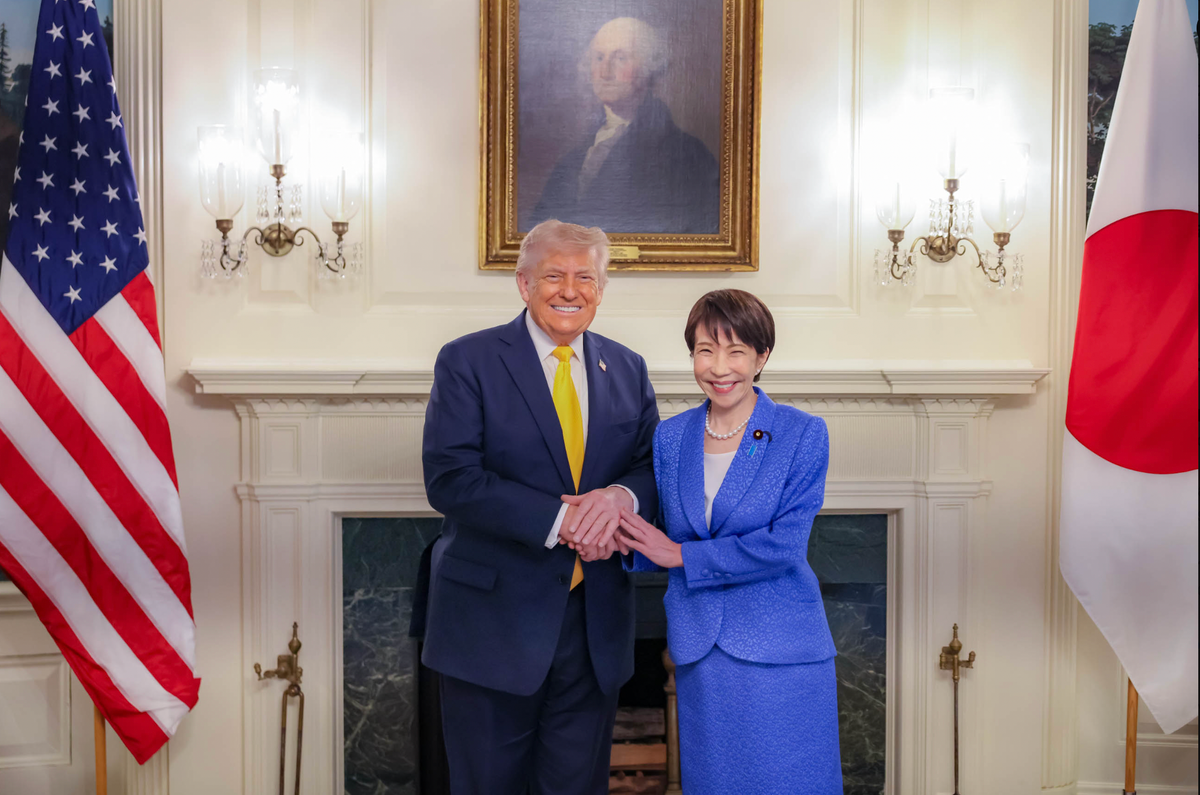
The urgency of this new chapter is dictated by a global landscape that no longer affords the luxury of slow-motion diplomacy. As Prime Minister Sanae Takaichi and President Donald Trump met in Washington on March 19, 2026, the world was reeling from the systemic shock of the ongoing Iran-Israel war. For Japan, the de facto closure of the Strait of Hormuz—through which 93% of our crude oil passes—is not a distant geopolitical curiosity; it is a direct threat to the nation’s industrial heartbeat.
The "comfortable ambiguity" of the past relied on a Middle East that was relatively stable under a U.S. security umbrella, but 2026 has proven that this umbrella is being pulled in too many directions. Takaichi’s presence in Washington was a recognition that Japan can no longer outsource its survival. In this "Fair and Open" dialogue, she did not merely ask for the U.S. to "fix" the crisis; she presented Japan’s record-high ¥122.3 trillion budget as a tool for energy diversification and domestic fortification.
The Myth of "Painted Peace"
The internal resistance to this shift, led by a vocal minority of opposition parties, reveals a dangerous preference for what can only be described as a "painted peace." During the Upper House Budget Committee sessions this week, rather than debating the actual fiscal merits of the budget, leaders like Tomoko Tamura (JCP) and Junya Ogawa (CRA) have pivoted toward a narrative that frames the U.S. and Israel as the aggressors.
This is a profound distortion. While mainstream outlets like NHK focus on domestic "complaints" in Iran, they frequently omit the far more harrowing truth: the ongoing, brutal executions of women and protestors by the Islamic regime. Ignoring these atrocities is not pacifism; it is moral blindness. The procedural sabotage we saw this week—including the dismissal motion against Committee Chair Tetsushi Sakamoto—is a tactic to delay the very infrastructure of survival that the Japanese people have waited decades for.
The Architecture of Resilience: "Stay Areas"
For decades, I have documented the lives of service members and written the stories of those on the front lines. I know that peace is not a wish; it is a shield. This is why the National Shelter Initiative—the plan to build high-grade shelters for 10% of our population (12 million people)—is the most significant domestic shift in a generation.
These are not merely bunkers; they are multifunctional "Stay Areas" designed to operate for weeks as supermarkets, gyms, and fully functional hospitals. This is a humanitarian obligation that has been overdue for generations. By building these spaces, Japan is signaling that we are no longer a "fragile" power. We are protecting the "fragile lives" of our people on the ground while the "Golden Dome" of SM-3 Block IIA interceptors—which we have now agreed to quadruple in production—protects them from the stars.
Breaking the Stranglehold: SMRs and Resource Sovereignty
The "New Chapter" of the alliance is also an industrial one. While the opposition wastes time, Takaichi finalized a historic $40 billion energy-security pact centered on the commercial deployment of GE-Hitachi BWRX-300 Small Modular Reactors (SMRs). This partnership leverages the transparency and legal rigor of the U.S. commercial market—a system that excels at scaling innovation while strictly enforcing anti-fraud laws.
Combined with the new Critical Minerals Action Plan to develop rare-earth mud near Minamitorishima, Japan is finally building a circular, sovereign economy. We are no longer pleading for resource security; we are creating it, ensuring our industrial pulse remains steady amid the shifting sands of the Middle East.
The Mandate: A Call for the Full Budget
Ultimately, the "New Chapter" launched in Washington rests on a single, non-negotiable foundation: the full ¥122.3 trillion fiscal year budget. We cannot allow the summit's progress to be stalled by the tactical retreats of a "partial budget." For the $73 billion in new Japanese investment and the National Shelter Initiative to move from vision to reality, the budget must pass in its entirety before the April 1 deadline.
We are no longer a nation "driven" by others' crises or paralyzed by "comfortable ambiguity." We are a sovereign power acting with strength and clarity to secure a future where the Indo-Pacific remains free. The time for "painted peace" is over; the time for earned peace is here.

Comments ()