The Essence of Takaichi Diplomacy: Humanity and Independence Shaping a New Order in the Indo-Pacific
Japan’s New Sovereign Path 🇯🇵 15 yrs after 3.11, PM Takaichi leads with active diplomacy. Stabilizing oil at ¥170, forging historic 🇨🇦 ties, & standing with 🇮🇱 against authoritarianism. Japan is reclaiming its pride and independence. #SanaeTakaichi #Japan #311 #Fukushima
The Definition of Diplomacy
Diplomacy is not mere subservience to the whims of other nations, nor is it a passive ritual of following the lead of global superpowers. Since 1945, Japan has navigated a perilous path wedged between the competing interests of the United States and the Soviet Union; even today, the unresolved territorial disputes with Russia remain a lingering shadow of that era. While the loss of the Northern Territories was the heavy price of the war Japan waged against the U.S., it is strictly a matter for Japan and its ally to navigate; it is the business of no other nation to attempt to drive a wedge into the Japan-U.S. relationship.
True diplomacy is the strategic use of a nation’s sovereign "cards" to uphold its interests while upholding universal humanitarian justice. The resolute stance currently demonstrated by the Takaichi administration represents a departure from historical entrapment, signaling the arrival of an "independent diplomacy" that postwar Japan has long struggled to reclaim.
The Truth About Iran and Media Inaction
While the Japanese media is quick to echo international condemnation of Israel’s military strikes, they remain conspicuously silent regarding the brutal reality of the Iranian regime’s own actions. In a horrific display of state-sanctioned violence, reports have emerged of the expedited execution of thousands of citizens—estimates suggest as many as 10,000 within a matter of days—following the recent unrest. Furthermore, the world must not ignore the IRGC’s (Islamic Revolutionary Guard Corps) cowardly strategy of militarizing civilian complexes; by establishing command centers and ammunition depots within schools and hospitals, they deliberately use their own children and patients as "human shields."
There is a fundamental difference that the media fails to portray: while Iran uses military offense to agitate regional tensions and play a proxy war, U.S. and Israeli strikes are focused on dismantling military infrastructure. Iran is merely playing by the most cynical old military playbook—flaunting the deaths of civilians and the suffering of neighboring nations as the "price" for supporting Israel. This is an ancient, calculated tactic of terror designed to manufacture outrage, yet it is a truth that many news outlets choose to bury.
Prime Minister Takaichi’s Commitment to Humanity and Women’s Rights
The reason Prime Minister Takaichi maintains such a firm and uncompromising stance toward the Iranian regime is rooted in her character as a leader who is both deeply humanitarian and principled. She recognizes that the current crisis in Iran is not merely a geopolitical dispute, but a systemic assault on human dignity. As a female leader who has long championed the empowerment of women, she cannot—and will not—ignore the horrific oppression of Iranian women who are being silenced by a regime that views them as expendable.
Japan has every sovereign right to make its own decisions in domestic and foreign policy, and Prime Minister Takaichi will make those decisions accordingly, free from the undue influence of those who do not share these democratic values. To offer support or even passive silence to a government that exports terror and treats its own daughters with such cruelty would be a betrayal of the very values of fairness and human rights she represents. Her diplomacy is driven by the conviction that a nation's strength is measured by its courage to stand with the oppressed, rather than making convenient deals with their oppressors.
Domestic Sabotage and the Budget Crisis
Japan has every sovereign right to determine its own domestic policies, and Prime Minister Takaichi is making those decisions with a focus on the nation's real-world stability. It is essential to recognize that the current global price hikes and the crisis in the Middle East were not caused by her administration; they are the direct result of the Islamic Republic of Iran’s actions, which have ignited regional tensions and threatened the global economy. Yet, at this critical juncture, we see a disgraceful display of political theater in the Diet.
One must ask: why is the opposition so determined to delay the passing of the national budget? While ordinary households grapple with costs, holding the budget hostage is nothing short of sabotaging the livelihoods of the Japanese people. It has become increasingly obvious that some "opposing" politicians are making decisions that favor enemy nations such as China, prioritizing foreign interests and the disruption of the Takaichi administration over Japan's stability. By obstructing the budget, they are not just fighting a political opponent; they are actively undermining the nation's ability to respond to the very real threats we face.
The Strategic Oil Reserve Release and Economic Sovereignty
Prime Minister Takaichi’s decision to implement an independent release of Japan’s strategic oil reserves is the clearest response to both domestic obstruction and international instability. Rather than waiting for a collective international consensus that may come too late, her administration has moved to supply the market with reserves equivalent to 1.5 months of domestic consumption. This bold measure, aimed at suppressing gasoline prices to around 170 yen, is nothing less than the exercise of Japan’s "economic right to self-defense" against the inflation hitting Japanese households.
Since it is the Iranian regime that is actively deteriorating the situation in the Middle East, it is the natural duty of a sovereign state to ensure that energy is not held hostage. By prioritizing the livelihoods of the Japanese people over foreign powers' expectations, Prime Minister Takaichi is demonstrating the exact form of leadership Japan needs—one that serves as a powerful deterrent to those who seek to profit from artificial price hikes.
"Active Enforcement" and the End of "Regret Diplomacy"
Toward North Korea, which repeatedly fires missiles into our waters and violates Japan’s territorial sovereignty, the era of mere "expressions of regret" has come to an end. It is a fundamental question of national security: why has Japan allowed itself to remain a target for so long? Today, Japan is exposed to grave nuclear threats not only from established powers like Russia and China but increasingly from North Korea, which continues to refine tactical nuclear warheads designed for battlefield use.
Under the Takaichi administration, the policy has shifted toward tangible action. When the Fisheries Agency seizes illegal vessels and arrests those violating our Exclusive Economic Zone (EEZ), it is the natural and necessary enforcement of the law by a sovereign state. Prime Minister Takaichi understands that protecting the nation against a nuclear-armed triad of adversaries requires the courage to move beyond words. By treating these incursions as the criminal acts they are, her administration is restoring the deterrent power vital to the safety of our citizens and the integrity of our borders.
Democratic Solidarity and the Role of Israel as an Ally
Japan occupies a pivotal position in the Indo-Pacific, and its future depends on a diplomacy of proactive cooperation with fellow democracies. Under Prime Minister Takaichi, Japan is reinforcing its commitment to a regional order based on the rule of law, recognizing that the security of one democracy is linked to the security of all. In this context, it is vital to acknowledge Israel as a steadfast and long-standing ally. Both nations share the burden of living in hostile neighborhoods and face the constant threat of authoritarian aggression.
This spirit of cooperation extends beyond security to vital economic partnerships, such as the historic energy agreements currently being forged with Canada. By securing long-term energy cooperation with a fellow G7 member such as Canada, Japan is diversifying its supply chains away from reliance on unstable regimes. This represents a landmark moment for the Japan-Canada relationship, ensuring that our solidarity with democratic allies is backed by real-world energy security. This collaborative diplomacy is the cornerstone of a stable world, ensuring Japan remains a leader that acts with integrity on the global stage.
Dismantling the Global Chain of Tyranny
The threats we face are not isolated; they are the coordinated maneuvers of an "axis of authoritarianism" involving Iran, Russia, North Korea, and China. We must speak plainly about the Islamic Republic’s role: it is a primary supplier of the weaponry, particularly drones, used to rain destruction upon Ukraine. Furthermore, we must acknowledge that terror groups like Hezbollah, the Houthis, and Hamas—which have infamously exploited UNRWA funding—are the direct products of the Islamic Republic’s destabilization strategy.
While much of the global and Japanese media echoes the narratives of these dictators, they ignore the horrific reality of a regime that has murdered its own people on an industrial scale, including the reported execution of 10,000 citizens in mere days. The Islamic regime has executed more than 100,000 people by hanging in only a decade.
This raises a critical question: why does the Japanese media emphasize a "narrative of fear" to haunt our public instead of facing these undeniable facts? This "rule by fear" is an ancient tactic that must be broken. Under Prime Minister Takaichi, Japan recognizes that toppling this influence is a global necessity. Japan has every right to exist as a sovereign state, and we will no longer remain silent while the truth is buried under propaganda.
Chinese Propaganda and the Reality of Human Rights
While China continues to weaponize historical issues, such as the "comfort women" narrative, as a propaganda tool to disparage Japan on the international stage, it remains silent about its own ongoing humanitarian atrocities. As noted by Dr. Ofir Haivry, China has a long-standing habit of repeating the same narratives over and over whenever it serves its strategic convenience. This hypocrisy is staggering. At this very moment, China is facilitating the human trafficking of North Korean defectors, many of whom are women, and forcibly repatriating them to a land where they face certain torture or public execution.
For a nation to lecture others on history while actively participating in modern-day slavery and the betrayal of the most vulnerable is a moral failure of the highest order. Under Prime Minister Takaichi, Japan is no longer intimidated by these one-sided narratives. We must call out this double standard: a country that uses history as a weapon to distract from its own role in human trafficking and its support of a brutal nuclear neighbor has no standing to speak of humanity or justice.
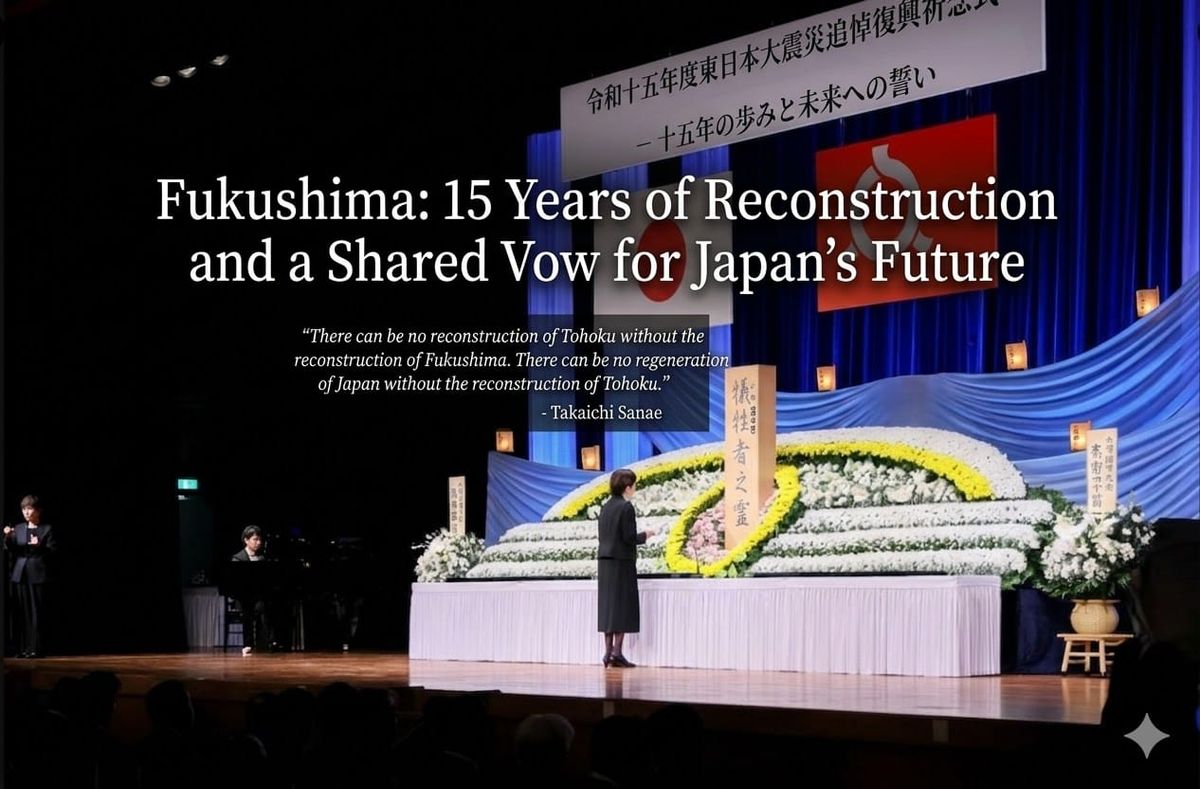
Japan’s Independence and Pride on the 15th Anniversary of 3.11
Yesterday, March 11, 2026, marked exactly fifteen years since the Great East Japan Earthquake—a day that holds a deeply personal and solemn weight for me and for every Japanese citizen. I still recall the harrowing stories of survival, like those who stood on the top floors of factories, such as Nippon Steel, watching as the first floors were completely washed away by the tide. Having overcome the immense hardships of that triple disaster, Japan now faces a new kind of crisis: a global energy storm and direct threats to our national security. It is truly baffling that opposition parties today show no remorse for the mismanagement of the 3.11 crisis under the Democratic Party of Japan (DPJ).
From their chaotic response to the nuclear accident to their corrupt policies regarding the accountability of power companies, their failures left a scar on this nation. Prime Minister Takaichi’s presence at the memorial services was more than a gesture of grief; it was a testament to a leader who understands that "recovery" is not complete until we have a government that prioritizes competence over political theater. We are no longer a country that simply survives; we are reclaiming our pride and ensuring that the safety of our people is never again sacrificed to political negligence.
Conclusion — A Future Forged by Japan’s First Female Prime Minister
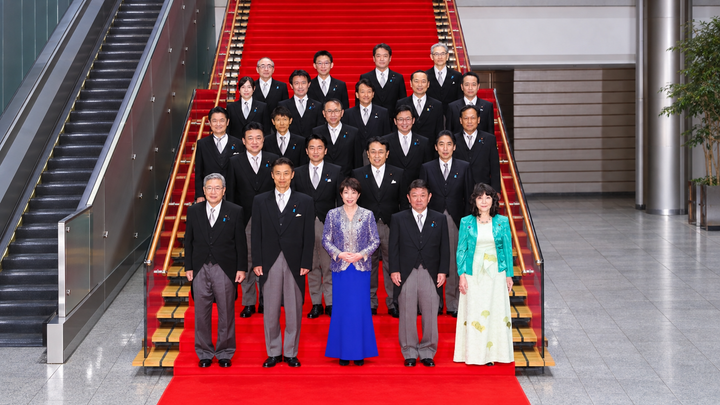
We stand at a critical turning point in history, and it is no coincidence that this moment is being met by the leadership of Japan’s first female Prime Minister. Prime Minister Takaichi brings a unique combination of unwavering principle and humanitarian insight to a world plagued by the "rule of fear" and authoritarian aggression. My ideal for Japan is not merely to be "equal" to the United States in a superficial sense, but to build a truly "open and fair diplomacy" based on mutual national interests, shared justice, and the courage to act.
Japan must fulfill its vital role as a pillar of stability alongside our democratic allies—from our steadfast partnership with Israel to our historic energy alliance with Canada. By moving away from the passivity of the past and embracing our role as a responsible, independent leader, we can resolutely protect the international order. Rather than seeking uniqueness for its own sake, we must face the facts with clarity. This is the only path to leaving behind a country that is strong, respected, and one that future generations can hold with immense pride.
Comments ()