
The Orinoco Shield: How the Caracas Pivot Defused the Hormuz Blockade
Analysis of the March 6, 2026, market close: How the U.S. 'Superior Position' in Venezuela is providing an energy firebreak for the Indo-Pacific during the Iran conflict. Featuring deep-dives into the TSE recovery, NSE refining margins, and the 21-day doctrine to neutralize the ICBM threat.
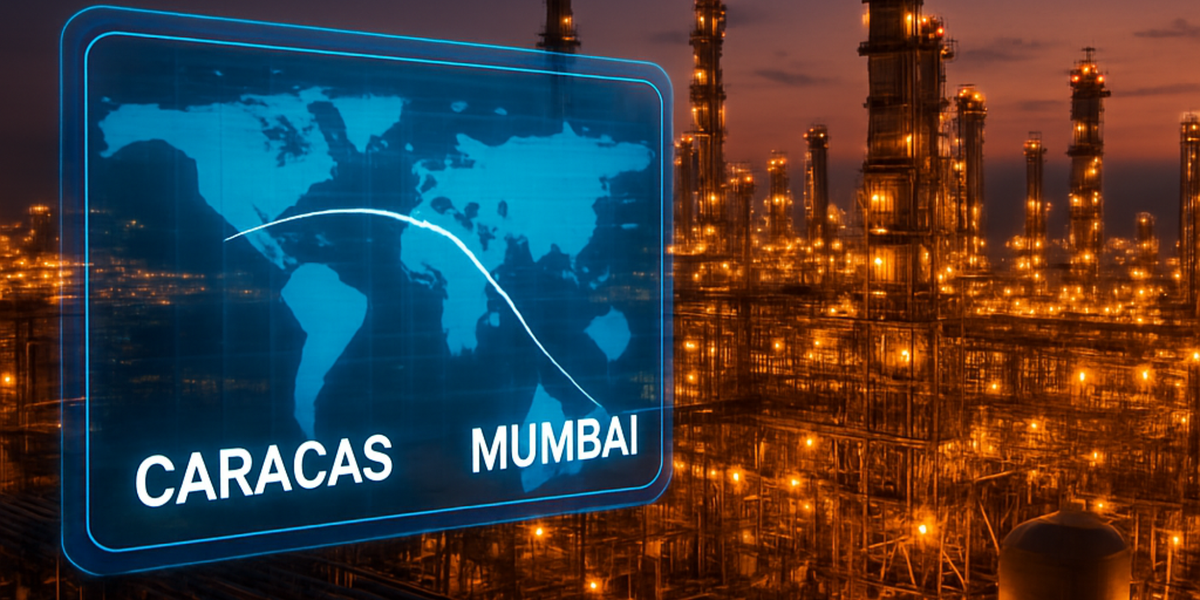
TOKYO / MUMBAI — As the closing bell echoed through the Tokyo Stock Exchange at 15:00 JST today, the Nikkei 225’s resilient finish at 55,510.47 offered more than just a Friday recovery; it provided the first clear market validation of a high-stakes geopolitical "arbitrage." While the joint U.S.-Israeli strikes on Iran—codenamed Operation Epic Fury—have sent shockwaves through the Persian Gulf, the global market’s refusal to enter a total death spiral reveals a structural shift in power. We are witnessing the fruition of a "Superior Position" strategy: by securing Venezuela’s world-leading oil reserves earlier this January via Operation Absolute Resolve, the U.S. has effectively de-risked the Middle East's ability to hold the global economy hostage. For the Indo-Pacific, this isn't just a change in maritime logistics—it is the birth of a Western Hemisphere energy corridor that renders the threat of a Strait of Hormuz blockade tactically obsolete.
The market "climate" this Friday is best described as calculated resilience. Earlier in the week, the specter of $100-per-barrel oil loomed large following the IRGC’s declaration of a blockade, but as the Friday session progressed in Asia, that fear began to decouple from reality. The Tokyo Stock Exchange (TSE) spent the day in a violent tug-of-war; the Nikkei Volatility Index (VI) skyrocketed nearly 37% to 43.93, yet the core index refused to break, even as Japanese refiners began formal discussions to tap the nation’s 254-day strategic petroleum reserve. This stability is rooted in a new market psychological floor: the realization that while Tehran may hold the "Off" switch for the Strait of Hormuz, the U.S. has spent the last 60 days in Caracas building a new "On" switch for the Pacific. For Japan—a nation that depends on the Middle East for 95% of its crude—the prospect of a Western Hemisphere energy fallback is more than a policy shift; it is the ultimate insurance policy against a "dark winter."
This shift has created a unique, high-velocity "hand-off" to the National Stock Exchange (NSE) in Mumbai, which remains in active session as Tokyo winds down. Unlike previous energy crises, where a Persian Gulf conflict triggered a unilateral "sell-everything" panic in India, the Nifty 50 is currently exhibiting a sophisticated divergence. While the index opened under pressure, it is finding a firm "floor" near 24,650, supported by a massive surge in the energy and refining heavyweights. At the center of this resilience is Reliance Industries (RIL), which has seen its share price jump over 2.2% today, hitting an intraday high of ₹1,424. The market logic is clear: Indian refiners, led by Reliance’s Jamnagar complex, are the primary global beneficiaries of the "Venezuela Pivot." As the U.S. Treasury issues strategic 30-day waivers and encourages the diversion of heavy Orinoco crude toward the Indo-Pacific, India is no longer just an importer of Middle Eastern risk; it has become the essential refining hub for a new, Western Hemisphere-led energy supply chain.
This strategic shift has created a unique, high-velocity "hand-off" to the National Stock Exchange (NSE) in Mumbai, which remains in active session as Tokyo winds down. Unlike previous energy crises, where a Persian Gulf conflict triggered a unilateral "sell-everything" panic, the Nifty 50 is exhibiting a sophisticated divergence today, finding a firm "floor" near 24,650. The primary driver is a sudden injection of supply certainty: just 24 hours ago, the U.S. Treasury’s OFAC issued General License 46A, a critical waiver that authorizes established entities to engage in the Venezuelan oil trade even amidst the escalating Iran conflict. At the center of this resilience is Reliance Industries (RIL), whose shares jumped over 2.2% to an intraday high of ₹1,424 (approx. $17.15). The market logic is airtight: Reliance’s Jamnagar complex—the world's largest refining hub—was architecturally engineered to process the "heavy-sour" Venezuelan grades that are now flowing at a significant discount to global benchmarks. By securing Venezuela, the U.S. has gifted India a massive refining margin windfall, transforming Mumbai from a vulnerable importer of Middle Eastern risk into the essential processing hub for a new, Western Hemisphere-led energy axis.
However, this "Superior Position" comes with a high structural cost, manifesting as a "speed limit" on the broader equity markets. As the Iran conflict enters its second week, the U.S. 10-year Treasury yield has climbed to a three-week high of 4.14%, reflecting a market that is rapidly pricing in "sticky" wartime inflation. This surge in yields has created a toxic environment for high-growth sectors, particularly in Japan’s critical tech industry. The Nikkei Semiconductor Stock Index felt this pressure today, slipping 0.19% to 17,608.25 even as the broader Nikkei rose, as investors grow wary of the "higher-for-longer" interest rate environment necessitated by an energy-driven inflation spike. While the Venezuela hedge provides the physical oil, the financial cost of the Middle East conflict is reducing the likelihood of Federal Reserve rate cuts in the first half of 2026. For the Indo-Pacific, this means that while the lights may stay on thanks to new supply chains, the cost of financing the next generation of AI and chip infrastructure just became significantly more expensive.
From a strategic standpoint, this "Superior Position" provides the U.S. with unprecedented leverage in the current negotiations over a post-conflict Middle East. Historically, the Islamic Republic’s primary deterrent was the "oil weapon"—the credible threat of global economic ruin through the closure of the Strait of Hormuz. However, the coordinated strikes of Operation Epic Fury, which targeted the IRGC’s naval assets and command continuity, have been paired with an even more potent economic weapon: the total revitalization of the Venezuelan supply chain. By ensuring that the world's most energy-dependent allies—Japan and India—have an immediate, U.S.-controlled alternative in the Western Hemisphere, the Trump administration has effectively "de-leveraged" Tehran. With General Dan Caine confirming that the operation is not a "one-night affair" and President Trump signaling a narrow four-week window to achieve regime stabilization, the U.S. is negotiating from a position where a prolonged blockade of the Strait no longer spells a global depression, but rather a terminal loss of revenue for a crumbling Iranian regime.
Underpinning this kinetic intensity is the sobering intelligence that Iran had reached a terminal "red line" in its strategic weapons development. For years, the international community monitored Tehran’s nuclear enrichment with growing alarm, but it was the recent, rapid acceleration of its Intercontinental Ballistic Missile (ICBM) program—designed specifically to reach the American homeland—that transformed a regional concern into an imminent domestic threat. The Trump administration’s decision to launch Operation Epic Fury was predicated on the assessment that Iran was no longer merely seeking a "conventional shield," but was weeks away from mating a miniaturized nuclear warhead to a delivery system capable of striking U.S. cities. In this context, the operation is not a traditional war of choice, but a preemptive strike against a looming nuclear blackmail. By obliterating these hardened facilities now, the U.S. is ensuring that the "next" Iranian leadership—one chosen by its people—will inherit a nation stripped of its most dangerous ambitions, permanently decoupling the future of the Iranian state from the specter of global nuclear catastrophe.
As the focus shifts to the NYSE opening (EST), Wall Street is grappling with a "tale of two markets" that mirrors the tension seen in Tokyo. Investors are no longer just pricing in a regional skirmish; they are reacting to the administration’s "Imminent Threat" narrative regarding Iran’s ICBM breakout. We expect a gap-up in Defense and Aerospace primes like Lockheed Martin and Northrop Grumman, as the 2-to-3 week operation window necessitates a massive expenditure in precision munitions and satellite surveillance. However, the broader S&P 500 remains tethered to the "Trump Energy Initiative" in Venezuela. If the opening bell sees a surge in Chevron and ExxonMobil, it will be a signal that the market believes the "Venezuela Hedge" is physically ready to absorb the shock of a Persian Gulf shutdown. The "Superior Position" is being tested here: can the promise of Western Hemisphere energy security outweigh the immediate inflationary drag of a high-tech preemptive strike?
Ultimately, the market’s behavior this Friday—from Tokyo’s resilience to Mumbai’s refining rally—is not a statement of political preference, but a cold-eyed recognition of a new geopolitical fact. The "Superior Position" is a structural reality: the U.S. has effectively neutralized the "oil veto" that has governed Middle Eastern diplomacy since 1973. While the risk to public opinion remains high due to the potential for "wartime inflation," the strategic logic is undeniable. By treating the Iranian nuclear and ICBM breakout as an imminent existential threat and using the Venezuelan Orinoco Belt as an economic firebreak, the administration has fundamentally redrawn the global energy map. As the NYSE prepares to open, the verdict is already being written in the trades of the Indo-Pacific: the age of Middle Eastern energy blackmail is over, and a new era of Western Hemisphere dominance has begun. For the global investor, the "Superior Position" isn't a campaign slogan—it is the new baseline for the 21st-century economy.



Comments ()